

Freedom & Whiskey American History Reteach:
Chapter 1 – New World Beginnings
As a Republican committed to upholding the values and traditions that define America, I recognize the critical importance of understanding our nation’s history. It serves as a guiding light, illuminating the path forward while helping us avoid the missteps of the past. With this conviction in mind, I’ve embarked on a journey to reacquaint myself with American history, starting with Chapter 1: “New World Beginnings.”
In this series of articles, my goal is to share not only my renewed understanding of each chapter but also the profound insights gained from examining how our past informs our present and shapes our future. By immersing myself in our nation’s story, I aim to cultivate a deeper appreciation for the rich tapestry of American history and its enduring relevance.
For those who may not have the luxury of time or inclination to dive into the intricacies of each chapter, I’ll provide a succinct yet comprehensive summary of the key themes and lessons. Let’s delve into Chapter 1: “New World Beginnings.”
New World Beginnings: Explorers and Empires
The earliest documentation in history is the Kish tablet from around 3500 BCE, but it was a mere 500 years ago that Italian and Spainard Europeans set foot on the Americas, igniting a profound transformation. From the towering peaks of the Andes to the dense jungles of the Yucatan Peninsula, the New World was a mosaic of civilizations, each with its own rich tapestry of culture, innovation, and conquest.
The Shaping of North America
The geological forces that shaped the land, from the Appalachian to the Rocky Mountains, laid the foundation for the diverse landscapes that greeted European explorers.
Peopling the Americas
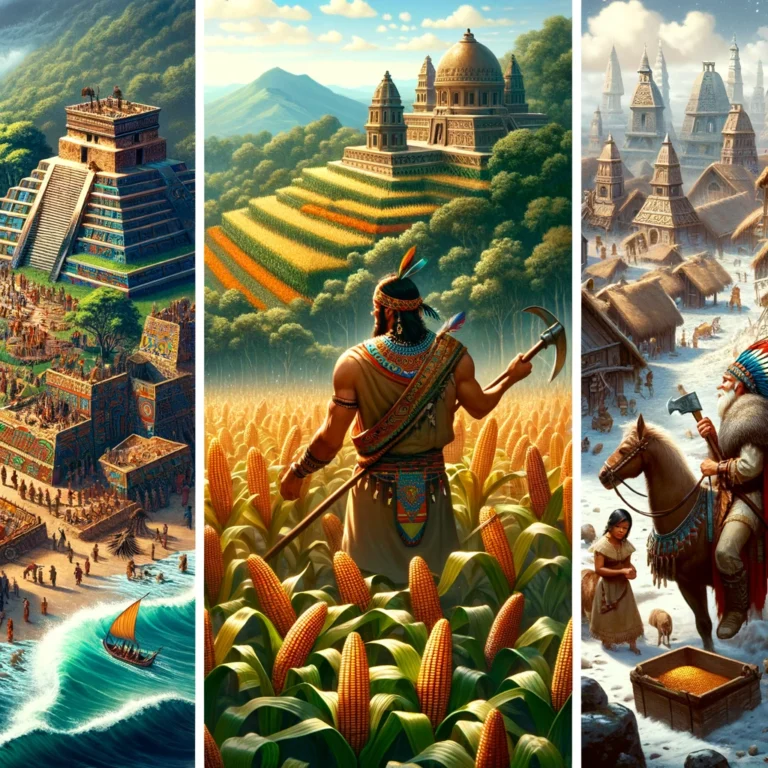
From the Incas of Peru to the Aztecs of Mexico, indigenous peoples flourished across the Americas. The Mayans crafted intricate step pyramids on the Yucatan Peninsula, while the Aztecs, with their imposing step pyramids and ritual sacrifices, dominated central Mexico. Meanwhile, the Incas forged a vast empire in Peru, connected by an elaborate network of roads and bridges.
The Earliest Americans
The development of maize, or corn, in Mexico revolutionized agriculture, allowing societies to transition from hunter-gatherers to settled farmers. From the adobe villages of the Pueblo Indians to the ceremonial mounds of the Ohio Valley, Native Americans cultivated a deep connection to the land.
Indirect Discoverers of the New World
Long before Columbus, Norse explorers like Erik the Red and Leif Erikson ventured to North America around 1000 A.D., leaving behind only whispers in Viking sagas. The Crusades stirred European interest in the exotic East, leading to the search for a westward route to Asia.
Europeans Enter Africa
Marco Polo’s travels to China ignited European curiosity, sparking a desire for spices from the East. Portugal led the charge, navigating new waters and establishing trade routes around Africa’s southern Cape of Good Hope. The advent of technologies like the caravel and compass revolutionized navigation, while the slave trade reshaped societies on both sides of the Atlantic.
Columbus Comes upon a New World
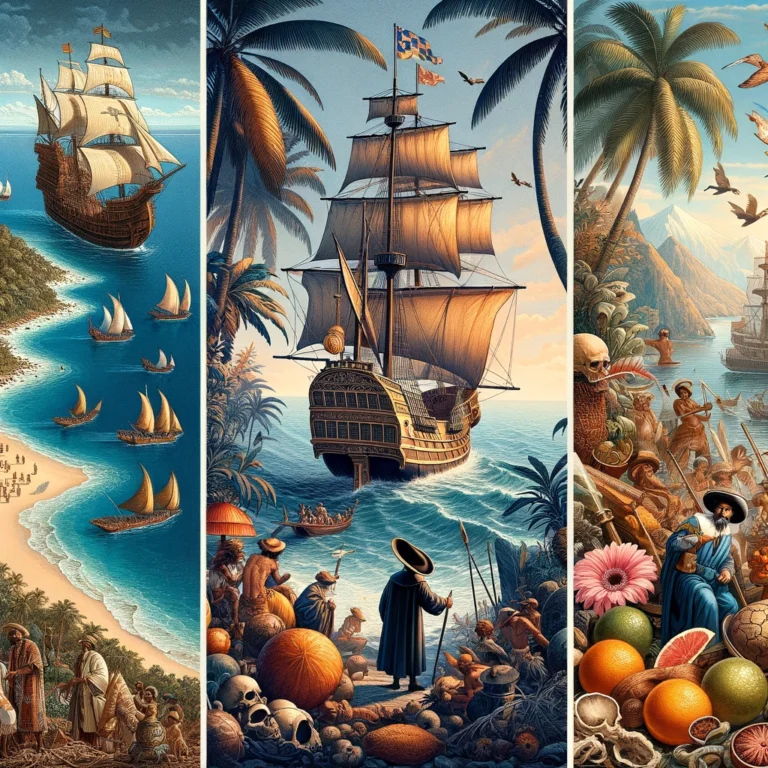
In 1492, Christopher Columbus set sail on a voyage that would reshape the course of history. His arrival in the Caribbean sparked a wave of exploration and conquest, fueled by Europe’s insatiable appetite for wealth and power. The Treaty of Tordesillas divided the New World between Spain and Portugal, setting the stage for centuries of colonization.
When Worlds Collide
The encounter between Europe and the Americas heralded a biological exchange of unprecedented scale. From corn and potatoes to smallpox and malaria, the exchange of goods and diseases reshaped ecosystems and societies on both continents.
The Spanish Conquistadores
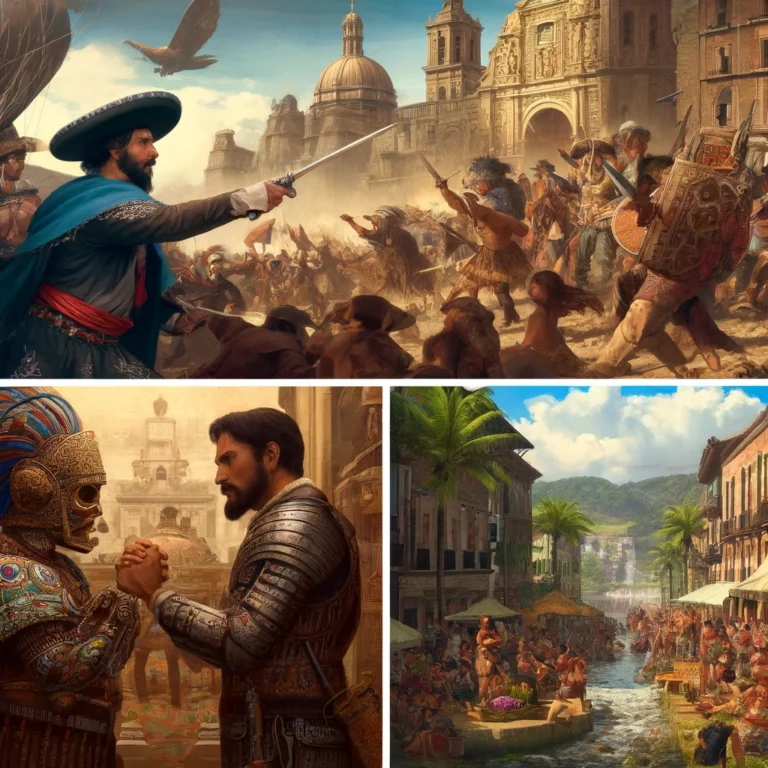
Armed with a thirst for gold and glory, Spanish conquistadors like Hernan Cortes and Francisco Pizarro embarked on campaigns of conquest across the Americas. From the fall of the Aztec Empire to the conquest of Peru, their exploits reshaped the political and cultural landscape of the New World.
The Conquest of Mexico
Hernan Cortes’s conquest of the Aztecs marked a turning point in the history of the Americas. Through a combination of military prowess and political cunning, Cortes toppled an empire and laid the foundations for Spanish rule in Mexico.
The Spread of Spanish America
Spanish society quickly spread across the Americas, leaving an indelible mark on the land and its people. From the forts of California to the cities of Florida, Spanish influence permeated every corner of the New World, shaping its culture, language, and identity.
As the Age of Exploration unfolded, it unleashed forces of conquest and colonization that would forever alter the course of history. From the towering empires of the Aztecs and Incas to the intrepid voyages of Columbus and Cortes, the New World beckoned with promises of wealth, adventure, and discovery. Yet, beneath the veneer of conquest and exploration lay a complex tapestry of cultures, societies, and civilizations, each with its own story to tell.
– F.W
If you dont learn history, youre doomed to repeat it.













Sources
U.S. History
Study Guide and Review
The fine print I have to include for my own protection:
The following text presents the author’s opinions and interpretations of events without intending to cause harm or defame any individuals, organizations, or entities mentioned. While the author has provided sources to support their claims, readers are encouraged to conduct their research and employ critical thinking to form their own conclusions.